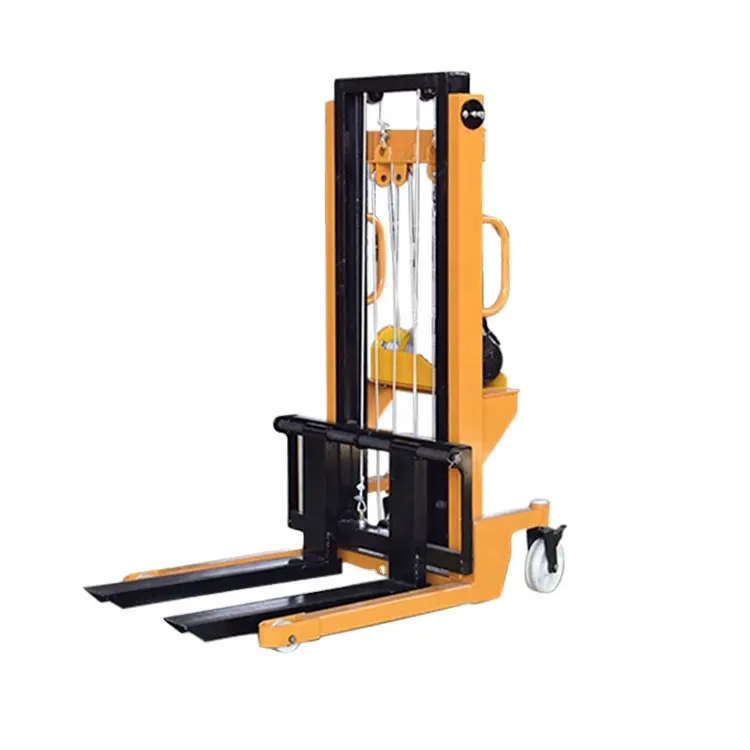
A manual stacker is one of the most essential and cost-effective material handling solutions used across warehouses, factories, retail stores, and logistics operations. Designed to lift, move, and stack loads without requiring electricity or fuel, manual stackers offer unmatched simplicity, durability, and affordability. Businesses looking to improve productivity while keeping operational costs low often rely on manual stackers as a practical alternative to forklifts.
What is a Manual Stacker?
A manual stacker is a hand-operated lifting device used to raise, lower, and transport pallets and heavy goods over short distances. It typically operates using a hydraulic system that is powered manually through a pump handle or foot pedal. Unlike electric stackers, manual stackers do not require batteries or power supply, making them ideal for small to medium-scale operations.
These stackers are widely used in environments where space is limited and load handling requirements are moderate.
Key Features of Manual Stackers
Manual stackers are engineered for efficiency, safety, and ease of use. Some of the key features include:
1. Hydraulic Lifting Mechanism
The core of a manual stacker is its hydraulic pump system, which enables smooth and controlled lifting of loads. This ensures safe handling of materials without sudden jerks.
2. Compact Design
Manual stackers are compact and easy to maneuver, making them suitable for narrow aisles and confined spaces.
3. Durable Construction
Made from high-quality steel, manual stackers are built to withstand heavy-duty usage and provide long-lasting performance.
4. Adjustable Forks
Most manual stackers come with adjustable forks to accommodate different pallet sizes, enhancing versatility.
5. Ergonomic Operation
With user-friendly handles and controls, manual stackers reduce operator fatigue and improve productivity.
Types of Manual Stackers
Choosing the right type of manual stacker depends on your specific requirements. Here are the most common types:
1. Hydraulic Manual Stacker
This is the most widely used type, operated using a hand pump or foot pedal. It is suitable for lifting moderate loads in warehouses and factories.
2. Semi-Electric Stacker
Though partially powered, it still requires manual movement. It offers easier lifting with minimal effort.
3. Straddle Stacker
Designed with adjustable legs to handle different pallet types, including closed-bottom pallets.
4. Counterbalance Stacker
Ideal for situations where there are no support legs in front, allowing easier access to loads.
Applications of Manual Stackers
Manual stackers are versatile and can be used across various industries. Some of the key applications include:
Warehousing and storage facilities
Manufacturing units
Retail stores and supermarkets
Logistics and distribution centers
Small-scale industries
Loading and unloading operations
They are especially useful in locations where forklifts cannot operate due to space constraints.
Benefits of Using Manual Stackers
1. Cost-Effective Solution
Manual stackers are significantly more affordable compared to electric or diesel-powered forklifts. They also have low maintenance costs.
2. No Power Requirement
Since they operate manually, there is no need for electricity, fuel, or batteries, making them ideal for areas with limited power supply.
3. Easy Maintenance
With fewer components and no complex electronics, manual stackers require minimal maintenance.
4. Safe Operation
Equipped with safety features like brakes, overload protection, and stable lifting systems, manual stackers ensure secure handling of goods.
5. Environmentally Friendly
Manual stackers produce zero emissions, making them an eco-friendly choice for businesses.
6. Space Efficiency
Their compact size allows easy navigation in tight spaces, maximizing warehouse efficiency.
How to Choose the Right Manual Stacker
Selecting the right manual stacker is crucial for optimal performance. Consider the following factors:
Load Capacity
Determine the maximum weight you need to lift. Manual stackers are available in various capacities, typically ranging from 500 kg to 2000 kg.
Lifting Height
Choose a stacker with a lifting height suitable for your storage racks and shelving systems.
Fork Dimensions
Ensure the fork width and length match your pallet size for efficient handling.
Usage Frequency
For heavy and frequent usage, opt for a robust and high-quality model.
Floor Conditions
Smooth floors are ideal for manual stackers. For uneven surfaces, choose models with durable wheels.
Maintenance Tips for Manual Stackers
Proper maintenance ensures long-term performance and safety. Here are some essential tips:
Regularly check hydraulic oil levels
Inspect wheels and brakes for wear and tear
Lubricate moving parts periodically
Avoid overloading beyond capacity
Store in a dry and clean environment
Routine maintenance not only extends the lifespan but also improves operational efficiency.
Safety Tips While Using Manual Stackers
Safety should always be a priority when handling heavy loads. Follow these guidelines:
Always check the load stability before lifting
Do not exceed the rated capacity
Use proper lifting techniques
Ensure the path is clear before moving
Wear safety gear like gloves and shoes
Proper training for operators can significantly reduce accidents and improve efficiency.
Why Businesses Prefer Manual Stackers
Manual stackers continue to be a preferred choice for many businesses due to their reliability and affordability. They offer a perfect balance between functionality and cost, making them ideal for startups, small warehouses, and retail environments.
Their ability to operate without power makes them especially valuable in areas with inconsistent electricity supply. Additionally, their simple design ensures that even first-time users can operate them with ease.
Conclusion
A manual stacker is an indispensable tool for efficient material handling in various industries. Its affordability, ease of use, and low maintenance make it a smart investment for businesses looking to streamline operations without high costs.
Whether you run a warehouse, retail store, or manufacturing unit, a manual stacker can significantly improve productivity and safety. By choosing the right model and maintaining it properly, you can ensure long-term performance and reliability.
If you are planning to upgrade your material handling system, investing in a high-quality manual stacker is a practical and cost-effective decision that delivers real value.
Contact Us
MOB : +91 9535035365,
EMAIL : info@forcelift.in
LOCATION : 17, Sri Maruti ayyappa industrial estate, Thigalarapalya Main Rd, Peenya 2nd Stage, Bengaluru, Karnataka 560058