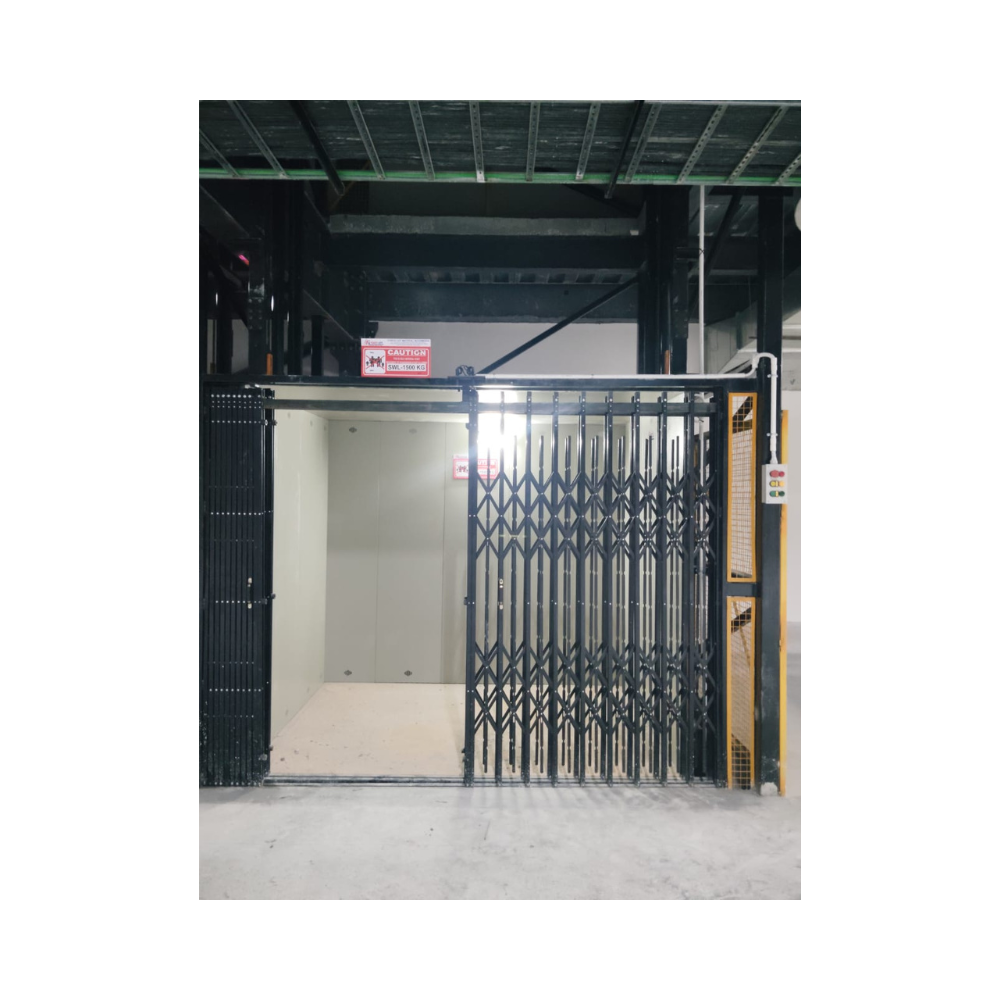
Hydraulic Goods Lift Cost
Contact : +91 9535035365, 7676664045
When businesses search for hydraulic goods lift cost, they are often looking to understand what factors influence pricing rather than a fixed number. Hydraulic goods lifts are customized industrial solutions, and their cost depends on multiple technical, structural, and operational requirements. At Forcelift, hydraulic goods lifts are designed to match exact site needs while ensuring safety, durability, and long-term efficiency.
What Is a Hydraulic Goods Lift?
A hydraulic goods lift is a vertical material handling system used to transport heavy loads between different floor levels in warehouses, factories, showrooms, logistics hubs, and commercial buildings. These lifts use hydraulic power for smooth lifting, making them ideal for heavy-duty and frequent usage.
Key Factors That Affect Hydraulic Goods Lift Cost
Instead of a standard price, hydraulic goods lift cost is influenced by several important factors:
Load Capacity
The required lifting capacity plays a major role. Goods lifts designed for light materials differ significantly from heavy industrial load systems in structure and components.
Lift Height and Number of Floors
The total travel height and the number of stops impact the design complexity. Higher lift travel requires stronger cylinders, guides, and safety mechanisms.
Platform Size and Design
Customized platform dimensions based on the goods being transported can affect the engineering and fabrication process. Larger platforms require reinforced frames and precision balancing.
Type of Installation
Hydraulic goods lifts can be installed with or without a pit, inside or outside a building. Site conditions such as available space, floor strength, and civil work requirements influence overall project scope.
Usage Frequency
Lifts designed for continuous or high-frequency usage need enhanced hydraulic systems and durable components to ensure long service life and consistent performance.
Safety Features
Advanced safety features such as overload protection, emergency stop systems, guide rails, and interlocking doors are essential and contribute to the overall configuration.
Why Choose Forcelift Hydraulic Goods Lifts?
Forcelift specializes in manufacturing hydraulic goods lifts that meet industrial standards and operational demands. Each lift is engineered after understanding the customer’s application, load type, and site conditions.
Key advantages include:
- Robust hydraulic systems for smooth and stable lifting
- Custom-built designs to match industrial requirements
- High-quality materials ensuring durability and safety
- Efficient performance with low maintenance needs
- Compliance with safety and operational guidelines
How Forcelift Helps You Optimize Cost
Rather than offering a generic solution, Forcelift focuses on value-based engineering. By selecting the right capacity, optimal lift height, and appropriate features, businesses can achieve a balance between performance and long-term reliability without unnecessary additions.
Proper planning during the design stage helps avoid overengineering, reduces downtime, and improves operational efficiency over time.
Common Applications of Hydraulic Goods Lifts
Hydraulic goods lifts from Forcelift are widely used in:
- Warehouses and distribution centers
- Manufacturing and industrial units
- Automobile workshops
- Retail back-end operations
- Logistics and material handling facilities
Conclusion
Understanding hydraulic goods lift cost requires evaluating technical needs rather than searching for a fixed price. With Forcelift, businesses receive customized hydraulic goods lift solutions designed for safety, efficiency, and durability. By focusing on application-specific requirements, Forcelift ensures long-term value and reliable performance for every installation.